
French Drain vs Perimeter Drain: What is the Difference?
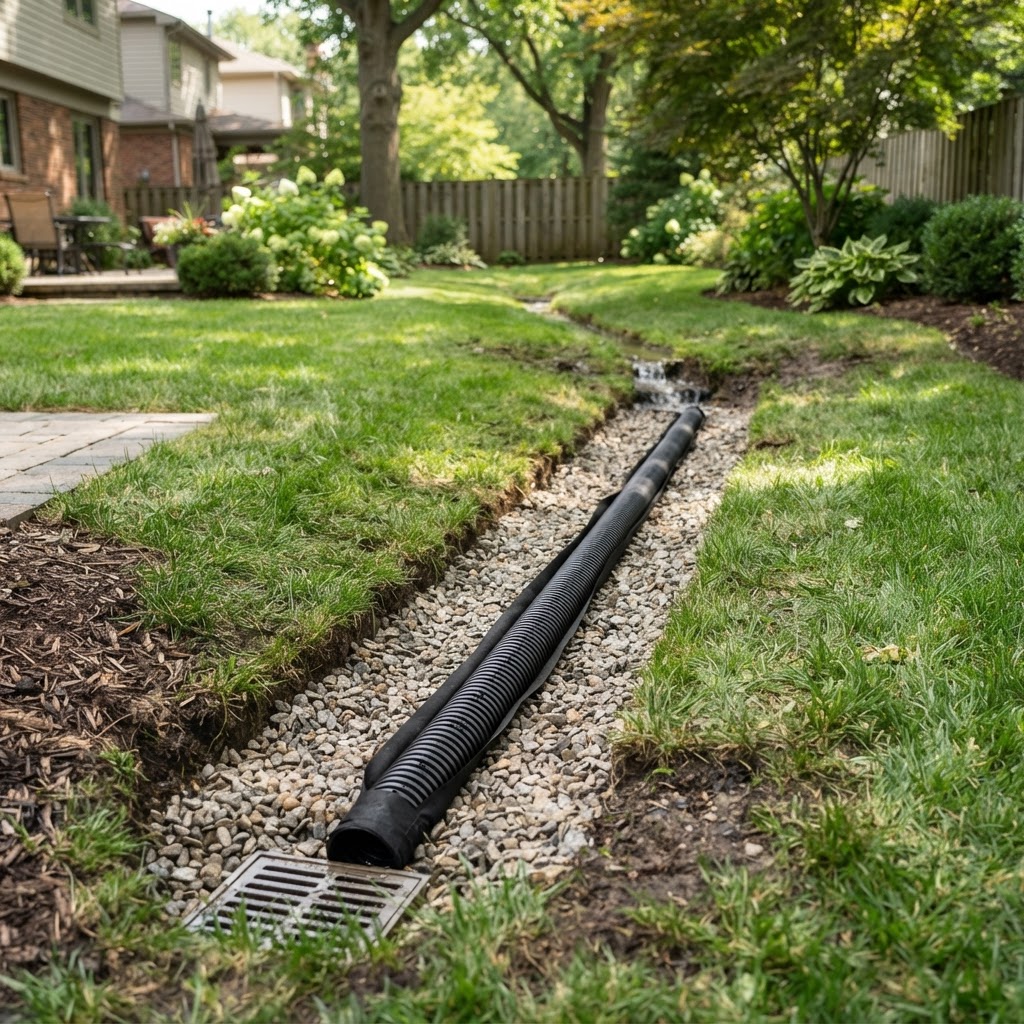
The two terms get used interchangeably, but they solve different problems at different depths. Here is how to tell which one you need.
French drain and perimeter drain are used to mean almost anything involving a pipe and gravel, which makes it hard to figure out what you actually need. They are different systems that solve different problems, and the distinction matters.
Perimeter drain
A perimeter drain runs around the footing of a foundation, below basement floor level. Its job is to relieve hydrostatic pressure against the foundation wall — to give groundwater a path away from the wall so it does not force its way through. If your basement is wet at the floor joint, the perimeter drain is the system in question.
French drain
A French drain is a surface or shallow subsurface trench — in a yard, along a slope, beside a driveway — that collects water moving across or just under the ground and carries it to an outlet. It does not run at footing depth and it is not primarily about the foundation. If your yard is soggy or water runs down a slope toward your house, a French drain is the relevant system.
Can they be the same thing?
Sometimes a perimeter drain is described as a "deep French drain," and the construction is similar — a perforated pipe in gravel. But the depth, location, and purpose are different. A French drain in your yard will not fix a wet basement caused by a failed perimeter drain, and replacing a perimeter drain will not dry out a soggy lawn 30 feet from the house.
If you are not sure which one you need, our yard drainage and perimeter drainage pages explain what each involves.
Need this looked at?
If you recognise a problem described here on your own property, we can inspect and tell you what is actually going on.