
Drainage Contractors in Richmond
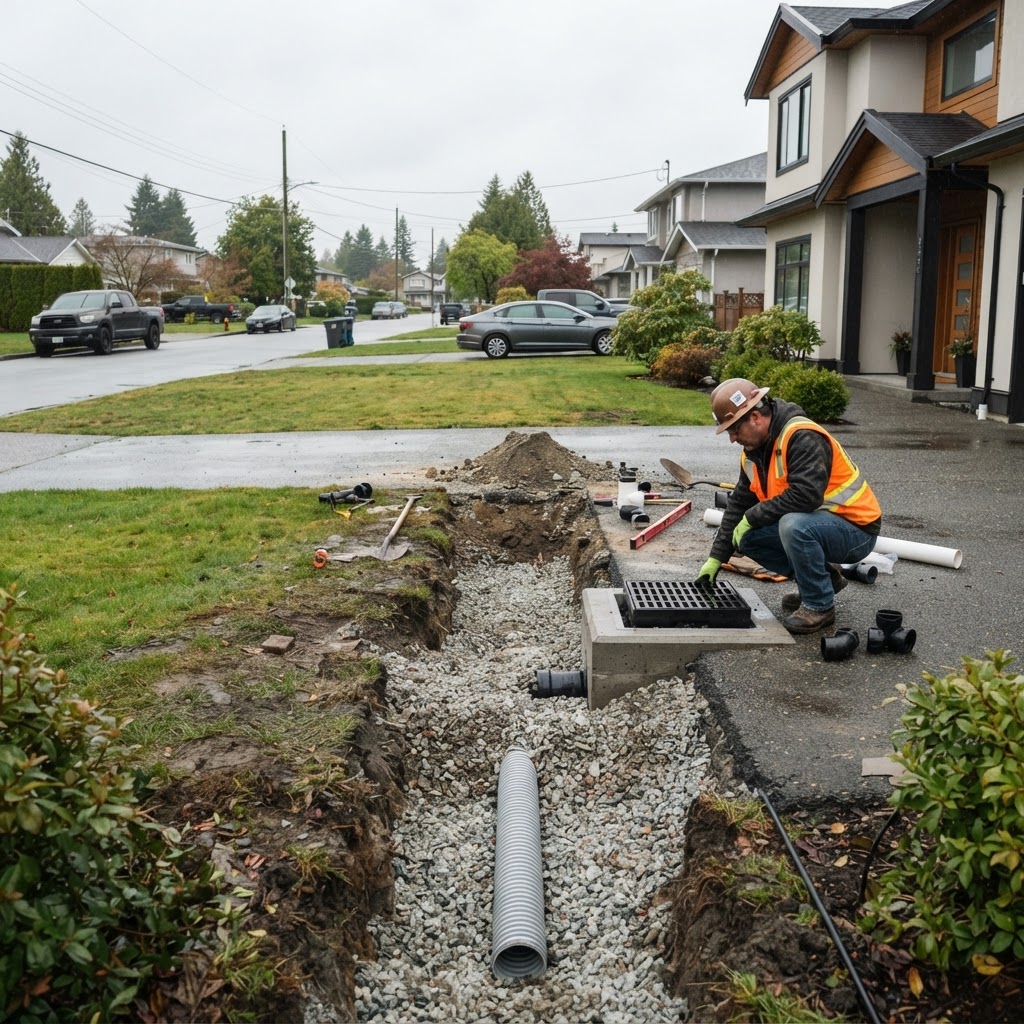
In Richmond the typical drainage problem is not a wet basement — it is a yard, driveway, or property that stays saturated because the water has nowhere to go. The water table is high, the ground is flat, and the native soil drains slowly, so gravity alone is often not enough. We work across Richmond on yard drainage, storm connections, catch basins, and surface water management, including sump systems where a gravity outlet is not available.
Drainage on flat, low-lying ground
On flat ground with a high water table, gravity alone often is not enough to move water off a property. The solutions are different from a sloped property: catch basins to collect surface water, underground lines to carry it to a storm connection or ditch, and in some cases a sump pump to lift water up to a discharge point. Grading matters too — even a few inches of fall across a property changes how water moves — but on truly flat ground, a pumped or ditch-connected system is often necessary.
The high water table
When the water table is close to the surface, a French drain or perimeter drain can sit in saturated soil and have nowhere to discharge. We assess the site to understand where water can actually be sent — a storm connection, a ditch, or a sump with a pump — before recommending a system. A drain with no effective outlet does not work, and that is especially true in Richmond.
Basement waterproofing, wet basement repairs & drain inspections in Richmond
Water in a basement is rarely just one problem. It can be a failed perimeter drain letting groundwater in at the footing, a crack in the foundation wall, or a waterproofing membrane that has broken down over decades. We start with a drain camera inspection to see what is happening inside the pipe, then determine whether the fix is a wet basement repair, basement waterproofing with an exterior membrane and drainage board, or damp proofing of the foundation wall to stop moisture wicking through the concrete. For older Richmond homes with original drainage, the answer is often a combination of drain repair and waterproofing — and we show you the camera footage before recommending anything.
How a drainage system protects your Richmond home
Most people never think about their drainage system until it stops working. Here is what a complete system looks like — and where water goes when everything is doing its job.
Rain on roof
Gutters collect it
Downspout
Carries it down
Membrane
Protects the wall
Drain rock
Filters the water
Perimeter drain
Collects groundwater
To sump/storm
Discharged safely
A working drainage system moves water off the roof, away from the foundation wall, and out to a safe discharge point — before it can build up against your foundation.
Before & after — Richmond drainage work
The kind of results we get on the jobs we do every week across Richmond.
 Before
 After
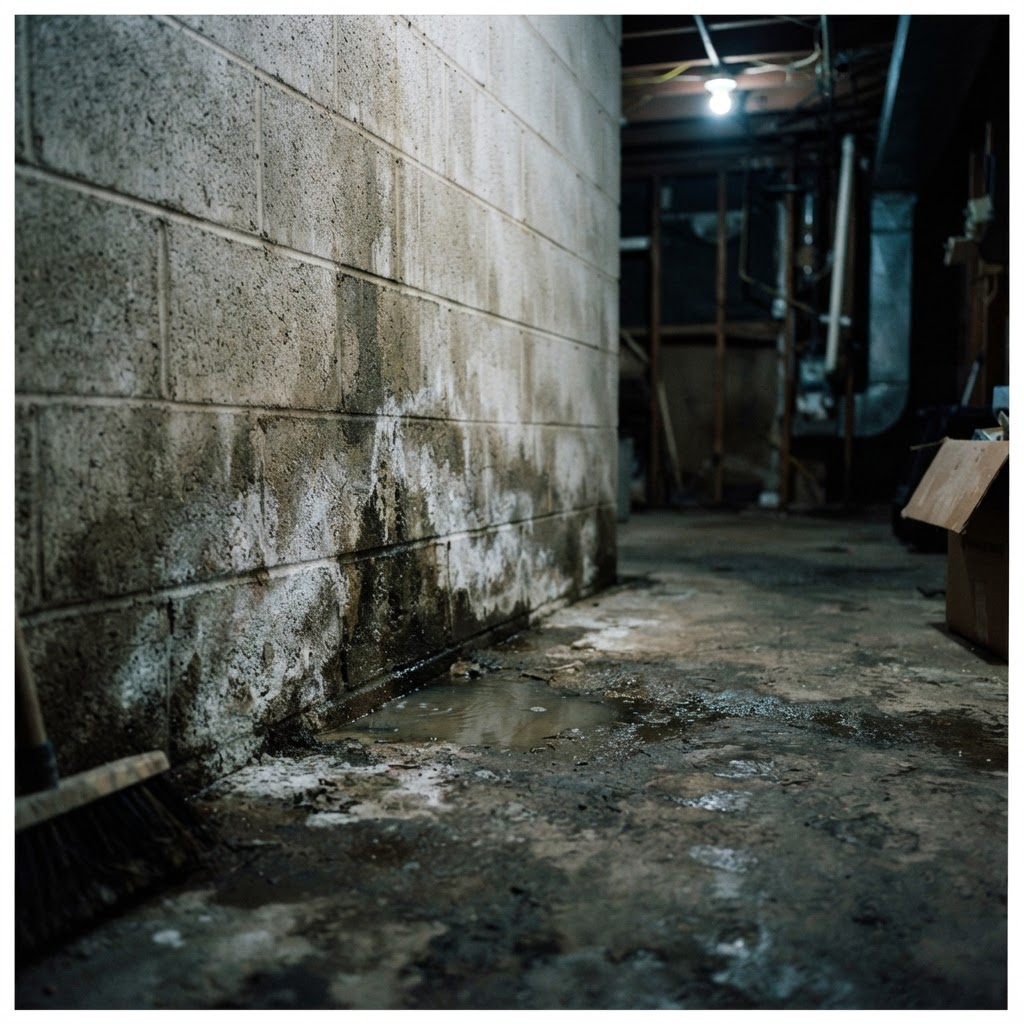
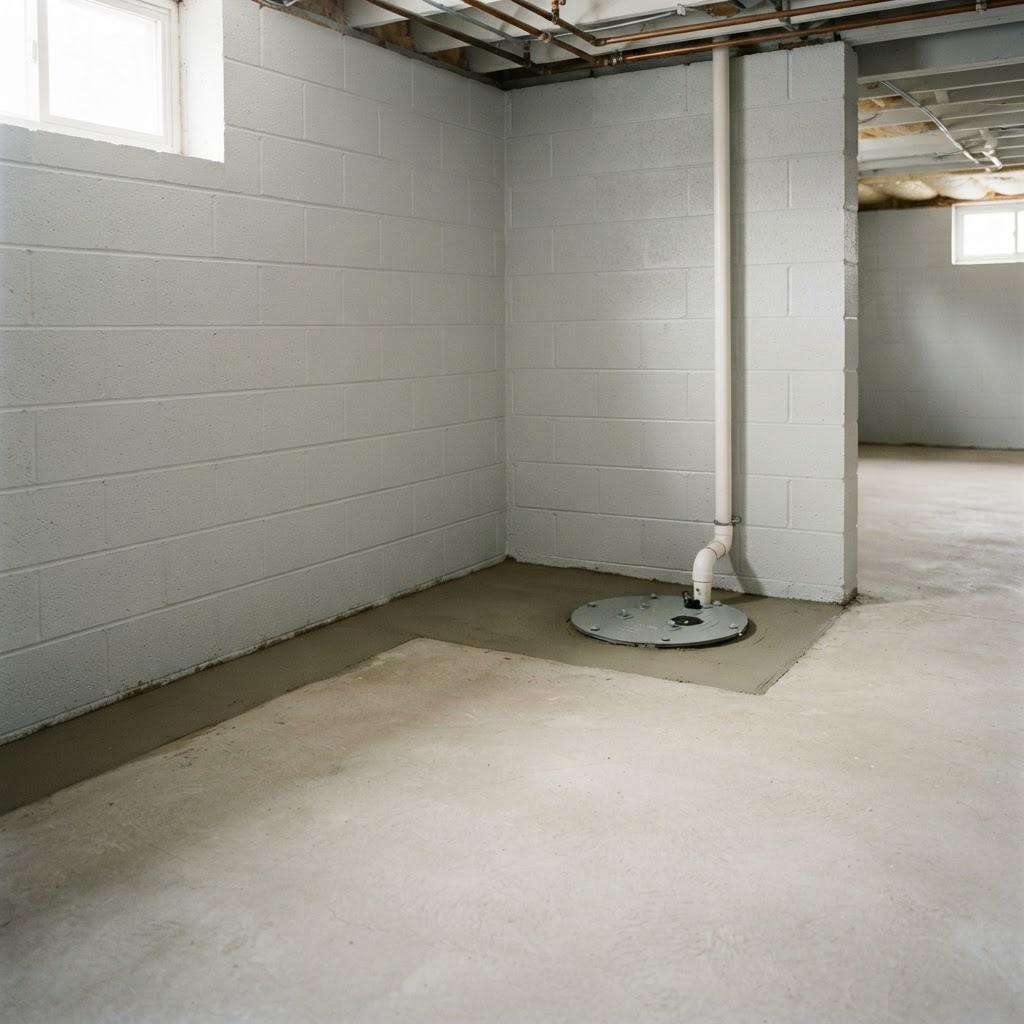
A wet basement with water at the floor joint — the original perimeter drain had collapsed. We replaced the system and it's been dry through every storm since.
 Before
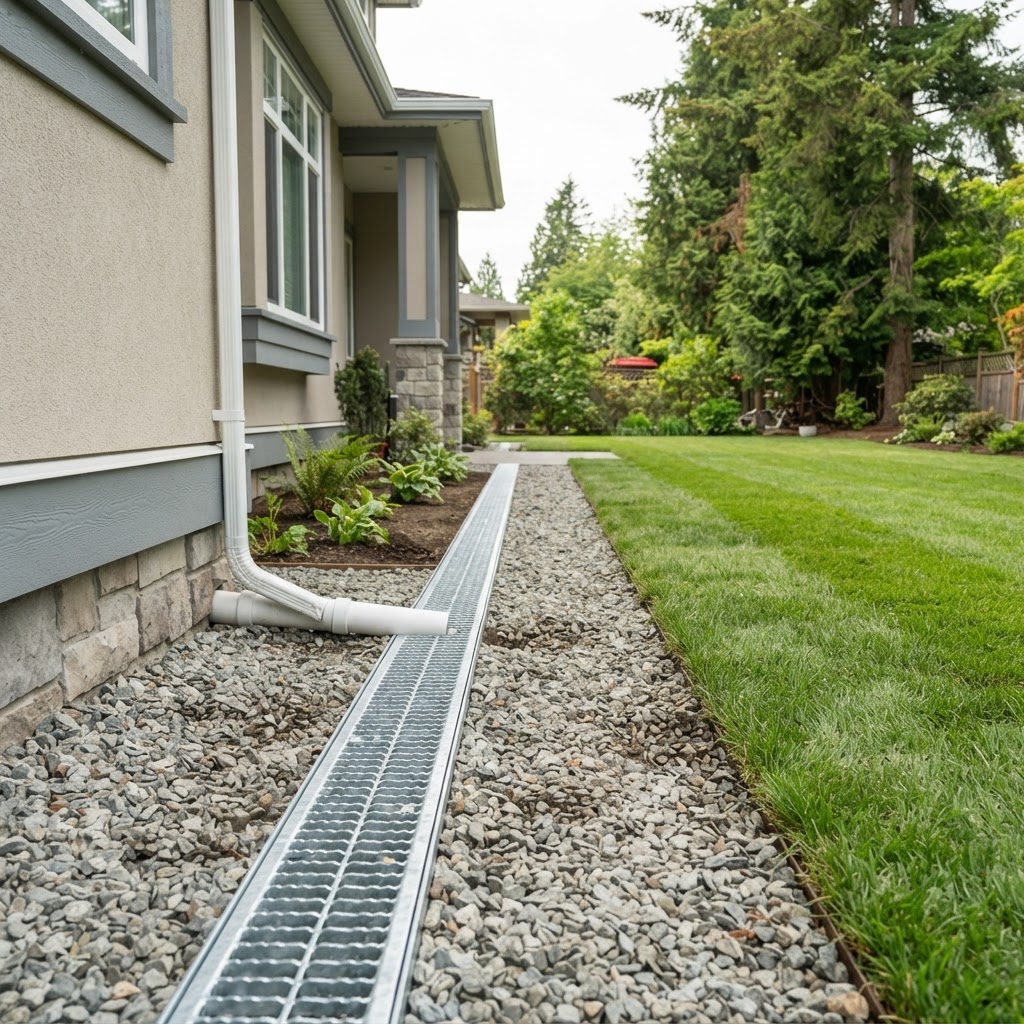 After
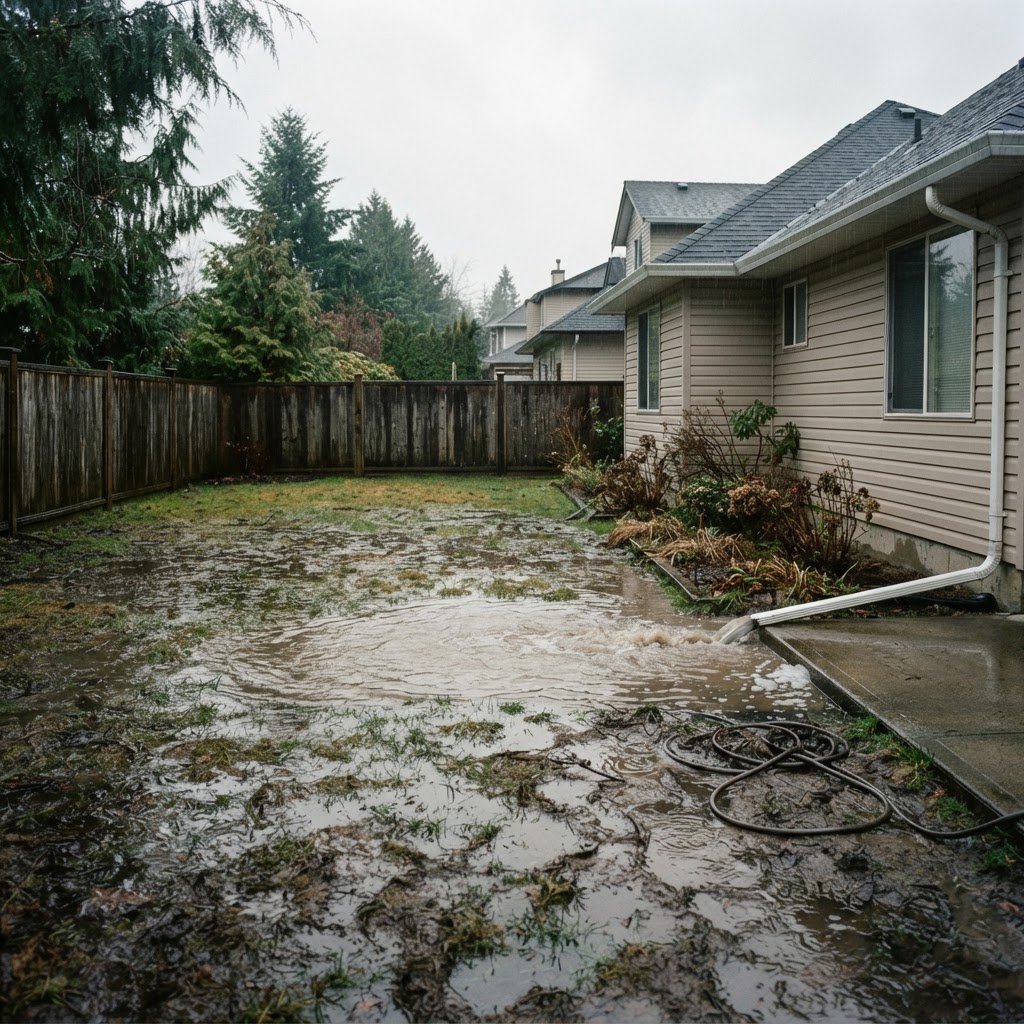
A soggy yard where the downspout dumped onto the lawn. We tied the downspout underground, ran a French drain along the foundation, and the yard dried out within a week.
Drainage services in Richmond
These are the services we are most often called for in Richmond. Each links to a page with more detail on what is involved.
Yard Drainage
Learn moreStorm Drainage
Learn moreCatch Basins
Learn moreFrench Drains
Learn moreWet Basement Repairs
Learn moreBasement Waterproofing
Learn moreDrain Camera Inspection
Learn moreSump Pumps
Learn moreRichmond drainage services — detailed pages
For each of the services below, we have a dedicated Richmond page covering what the work involves, what the local conditions mean for that service, and answers to common questions from homeowners in Richmond.
Drain Tile Repair in Richmond
Read moreDrain Tile Replacement in Richmond
Read moreDrain Tile Cleaning in Richmond
Read moreDrain Inspection in Richmond
Read moreWet Basement Repair in Richmond
Read moreFoundation Waterproofing in Richmond
Read moreBasement Leak Repair in Richmond
Read moreRichmond drainage FAQs
My Richmond yard is always wet. Is it the water table?
It can be — Richmond has a naturally high water table and dense soil. But it can also be surface grading, a blocked storm connection, or a downspout discharging onto the lawn. We assess the property to identify the source before recommending a solution.
Do Richmond homes need perimeter drains if they have no basement?
Slab-on-grade homes still benefit from foundation drainage and good surface drainage, but the priority in Richmond is usually yard and storm drainage rather than a deep perimeter system. We assess what the property actually needs.
Areas we serve around Richmond
Request Drainage Service
Tell us what is happening and where. We will call you back the same business day to discuss the problem and arrange an inspection if needed.