
Wet Basement Repair — Finding the Cause and Fixing It
A wet basement is the most common call we get, and it is almost always fixable — but only if you find the actual cause first. Water enters a basement in a handful of distinct ways, and each one has a different fix. Jumping straight to a solution without diagnosing where the water is coming from is how people end up paying for work that does not hold. We inspect first — camera the perimeter drain, look at where the water appears, walk the property — and then tell you what is actually happening before we recommend anything.
Why does your basement get wet every time it rains?
If your basement takes on water during or after rain, the cause is almost always one of four things — and sometimes a combination. A failed perimeter drain at the footing that can no longer carry groundwater away from the wall. Surface water running toward the foundation because the grading slopes the wrong way. A crack or joint in the foundation wall that has lost its waterproofing and lets water straight through. Or hydrostatic pressure — the force of water-saturated soil pushing against the wall and floor until it forces its way in.
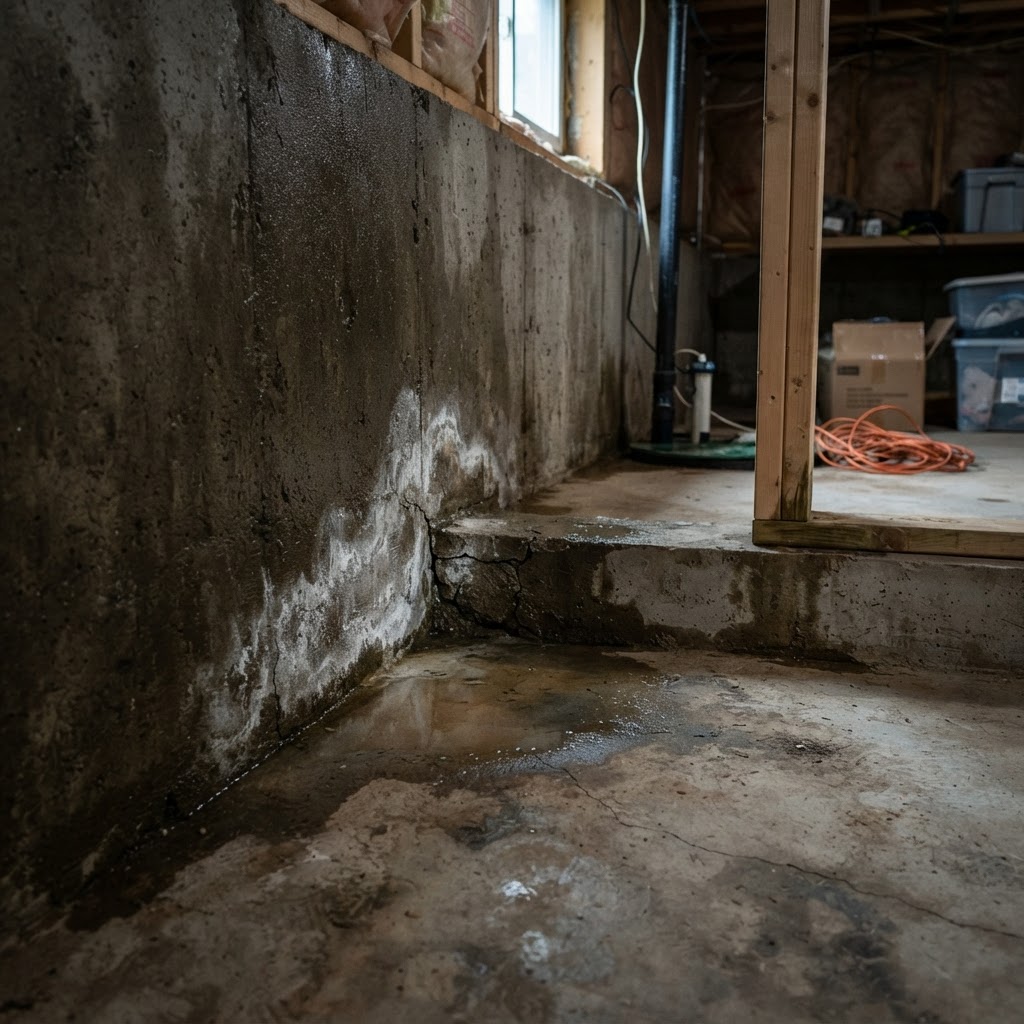
The location of the water inside the basement tells you a lot about which of these is happening. Water at the floor-to-wall joint points to the perimeter drain. Water running down a wall or through a visible crack points to the wall waterproofing. Water appearing at the top of the wall or near a window points to surface water getting in from above. We use those clues, plus a camera inspection, to confirm before we recommend a fix.
The problem may be outside your foundation
Most wet basements are not a basement problem — they are a drainage problem outside the foundation. The perimeter drain at the footing is the system designed to keep groundwater from building up against the wall. When it has silted up, collapsed, or was never installed to current standards, water pressure builds against the foundation and finds its way in through the path of least resistance — usually the floor-to-wall joint.
This is why a wet basement is so often a perimeter drain problem rather than a wall problem. The wall itself may be sound; the water is getting in because the system that was supposed to keep it away from the wall has stopped working. A camera inspection of the perimeter drain confirms whether that is what is happening before you spend money on the wrong fix.
- Water or dampness at the floor-to-wall joint after heavy rain
- A white, powdery mineral buildup (efflorescence) on the wall near the floor
- A musty or earthy smell that gets worse after rain
- A sump pump that runs more than it used to, or runs almost continuously in wet weather
- Dampness along more than one wall, not just one corner
When a drainage repair is not enough
Sometimes fixing the perimeter drain is not the whole answer. If water is also entering through a crack in the wall, through a cold joint, or because the exterior waterproofing on the wall has deteriorated, a new perimeter drain will relieve the pressure at the footing but will not stop water coming through the wall itself. In that case, the wall needs waterproofing as well — either a targeted crack repair or, if the waterproofing has failed along a section, an excavation to re-waterproof that part of the wall.
We will tell you honestly if your basement needs both. The inspection shows us whether the water is coming from below (the drain), through the wall (the waterproofing), or from above (surface water), and the fix is matched to what we find — not a blanket solution that might miss the actual entry point.
What a wet basement repair involves
The repair depends on the diagnosis. A failed perimeter drain may need a targeted repair or a full replacement. A wall crack may need injection or a section excavation to re-waterproof. Surface water may need regrading or downspout extensions. In many cases, more than one of these is needed — and the order matters. We explain what we found, what each fix does, and what it costs before any work starts, so you are not paying for half a solution.
Wet Basement Repairs — common questions
Wet Basement Repairs across Metro Vancouver
We have dedicated pages for wet basement repairs in cities across Metro Vancouver and the Fraser Valley. Each covers what the local conditions — soil, slope, housing age, tree cover — mean for that specific service in that area.
Wet Basement Repair in Vancouver
Read moreWet Basement Repair in Burnaby
Read moreWet Basement Repair in Richmond
Read moreWet Basement Repair in Surrey
Read moreWet Basement Repair in North Vancouver
Read moreWet Basement Repair in West Vancouver
Read moreWet Basement Repair in Coquitlam
Read moreWet Basement Repair in Langley
Read moreWet Basement Repair in Delta
Read moreWet Basement Repair in New Westminster
Read moreWet Basement Repair in Port Coquitlam
Read moreWet Basement Repair in Port Moody
Read moreWet Basement Repair in Maple Ridge
Read moreWet Basement Repair in Pitt Meadows
Read moreWet Basement Repair in White Rock
Read moreWet Basement Repair in Tsawwassen
Read moreBasement Leak Repair in Vancouver
Read moreBasement Leak Repair in Burnaby
Read moreBasement Leak Repair in Richmond
Read moreBasement Leak Repair in Surrey
Read moreBasement Leak Repair in North Vancouver
Read moreBasement Leak Repair in West Vancouver
Read moreBasement Leak Repair in Coquitlam
Read moreBasement Leak Repair in Langley
Read moreBasement Leak Repair in Delta
Read moreBasement Leak Repair in New Westminster
Read moreBasement Leak Repair in Port Coquitlam
Read moreBasement Leak Repair in Port Moody
Read moreBasement Leak Repair in Maple Ridge
Read moreBasement Leak Repair in Pitt Meadows
Read moreBasement Leak Repair in White Rock
Read moreBasement Leak Repair in Tsawwassen
Read moreRequest Drainage Service
Tell us what is happening and where. We will call you back the same business day to discuss the problem and arrange an inspection if needed.