
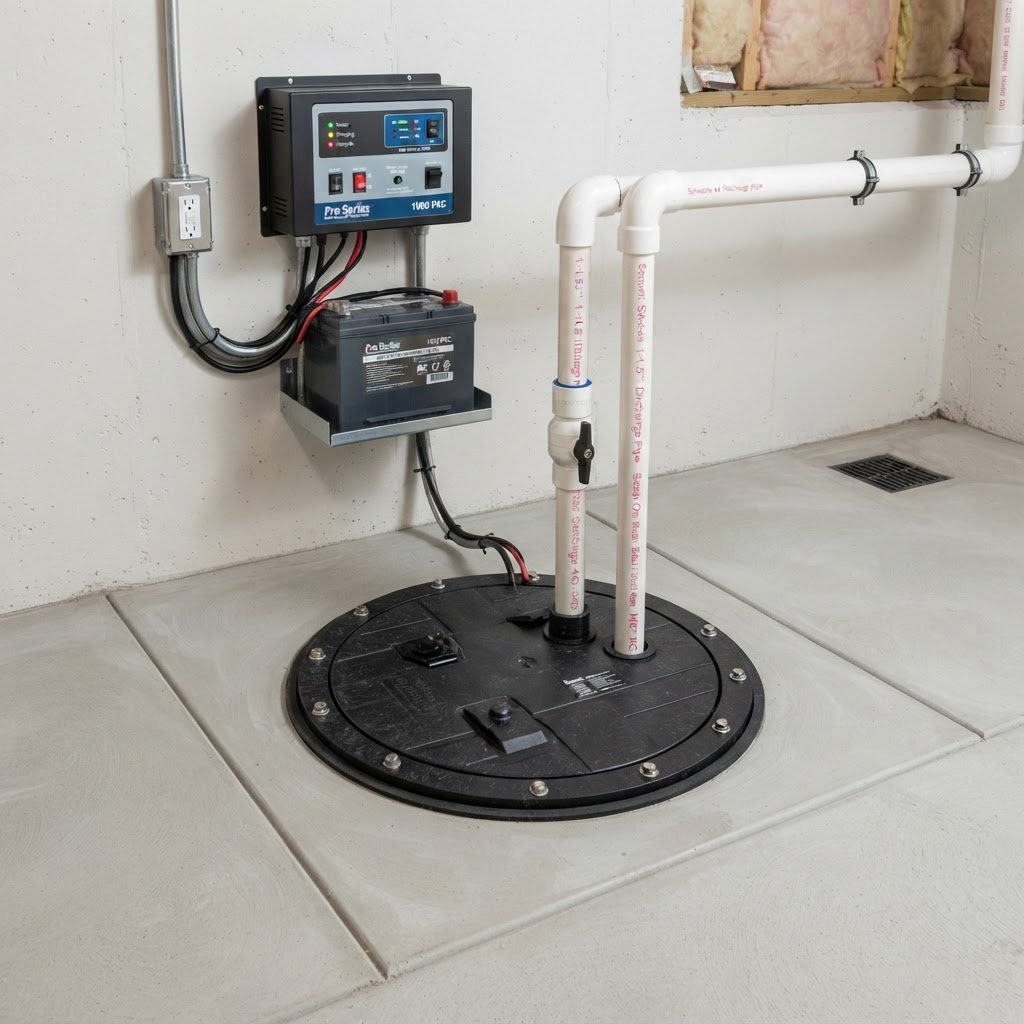
Sump Pump Installation, Replacement and Repair
A sump pump is the last line of defence when gravity alone cannot move water away from your foundation — and in flat, low-lying parts of Metro Vancouver like Richmond, Delta, and Pitt Meadows, it is often the only thing standing between a dry basement and a flooded one. We install, replace, and repair sump pumps as part of a complete drainage system, not as a standalone afterthought. A pump that is undersized, poorly discharged, or lacking a backup will fail exactly when you need it most.
When a sump pump is part of the system
A sump pump becomes necessary when a property cannot drain by gravity — when the storm connection is higher than the perimeter drain, when the ground is flat with no natural fall, or when the water table is so high that a gravity outlet would discharge into already-saturated ground. In these situations, the perimeter drain or interior drainage channel collects water and routes it to a sump pit, and the pump lifts it to a discharge point that can handle it.
A sump pump is not a substitute for a perimeter drain. It is part of the system — the drain collects the water, the sump pit holds it, and the pump moves it out. If the drain has failed, a new pump alone will not fix the problem.
Types of sump pumps we install
The two main types are submersible and pedestal. Submersible pumps sit inside the sump pit, motor and all, and are quieter and more discreet — the right choice for most residential installations. Pedestal pumps have the motor above the pit on a column, which can make them easier to service but takes up more space. We size the pump to the volume of water the system needs to move, not to a generic spec — an undersized pump will run continuously and burn out, and an oversized one will short-cycle and wear prematurely.
- Primary submersible sump pumps for residential perimeter drain systems
- Battery backup sump pumps that run when the power goes out
- Water-powered backup pumps for homes without reliable power backup
- Sump pit installation with sealed lids to keep humidity and noise down
- Discharge line installation to storm connection or surface outlet
Battery backup and redundancy
The most common time for a sump pump to fail is during a power outage — which is also when the heaviest rain tends to hit. A battery backup pump kicks in automatically when the power drops, running on a deep-cycle marine battery for hours or days depending on the volume. For homes that rely entirely on a sump pump to keep the basement dry, a backup is not optional — it is insurance. We install backup systems alongside the primary pump, with an alarm that alerts you if the water level rises above the primary pump's set point.
Sump pump maintenance and replacement
A sump pump that runs silently in the corner is easy to forget about until it stops working. We recommend an annual check — test the float, confirm the pump kicks on, check the discharge line for blockages, and test the backup battery. A pump that is more than seven to ten years old, runs constantly, or makes unusual noises is due for replacement before it fails at the worst possible time. Replacing a pump before it fails is a fraction of the cost of cleaning up a flooded basement.
Sump Pumps — common questions
Request Drainage Service
Tell us what is happening and where. We will call you back the same business day to discuss the problem and arrange an inspection if needed.