

Wet Basement Repair in White Rock
A wet basement is the most common call we get from White Rock homeowners, and it is almost always fixable once you know where the water is coming in. Water moves through the sand quickly but undercuts the bluffs, and the upland water table usually sits deeper than the footing on a typical lot. Mostly 1950s to 1980s homes through East Beach, Ocean Park and Crescent Beach, many with mature landscaping and the original drain tile still in place. We inspect first — camera the drain tile, read the water pattern inside, walk the grade outside — then tell you what is actually happening.
Why your White Rock basement gets wet
If your basement takes on water during or after rain, the cause is almost always one of four things — and sometimes a combination. A failed drain tile at the footing that can no longer carry groundwater away from the wall. Surface water running toward the foundation because the grading slopes the wrong way. A crack or joint in the foundation wall that has lost its waterproofing and lets water straight through. Or hydrostatic pressure — the force of water-saturated soil pushing against the wall and floor until it forces its way in.
The location of the water inside the basement tells you a lot about which of these is happening. Water at the floor-to-wall joint points to the drain tile. Water running down a wall or through a visible crack points to the wall waterproofing. Water appearing at the top of the wall or near a window points to surface water getting in from above.
Finding the cause before fixing the symptom
Most wet basements are not a basement problem — they are a drainage problem outside the foundation. The drain tile at the footing is the system designed to keep groundwater from building up against the wall. When it has silted up, collapsed, or was never installed to current standards, water pressure builds against the foundation and finds its way in through the path of least resistance — usually the floor-to-wall joint.
This is why a wet basement is so often a drain tile problem rather than a wall problem. The wall itself may be sound; the water is getting in because the system that was supposed to keep it away from the wall has stopped working. A camera inspection of the drain tile confirms whether that is what is happening before you spend money on the wrong fix.
What a wet basement repair involves
The repair depends on the diagnosis. A failed drain tile may need a targeted repair or a full replacement. A wall crack may need injection or a section excavation to re-waterproof. Surface water may need regrading or downspout extensions. In many cases, more than one of these is needed — and the order matters. We explain what we found, what each fix does, and what it costs before any work starts, so you are not paying for half a solution.
What causes wet basements in White Rock
Water moves through the sand quickly but undercuts the bluffs, and the upland water table usually sits deeper than the footing on a typical lot. Sandy bluffs and gravel deposits above Semiahmoo Bay, with till further inland. Those two things together decide which of the usual causes you are dealing with: groundwater sitting against the footing, hydrostatic pressure through the wall, or surface water arriving from above.
Mostly 1950s to 1980s homes through East Beach, Ocean Park and Crescent Beach, many with mature landscaping and the original drain tile still in place. On the original drainage, water at the floor-to-wall joint is the classic pattern — the drain tile has stopped carrying groundwater, so it builds until it finds the easiest way in, which is almost never the wall itself.
Storm water runs to the beach outfalls, and on the bluff-top streets the grade means water is already moving fast by the time it reaches your property line.
Wet basements across White Rock
We work through East Beach, Ocean Park, Crescent Beach and the rest of White Rock, and the call pattern is consistent: damp patches after the first long storm, a musty smell in the basement, paint flaking off the lower wall.
The order of the fix matters. Regrading and downspout work before excavation, injection for an isolated crack, and the drain tile only when the evidence points at it. We tell you what the diagnosis is and what each stage costs before starting.
How water enters basements in White Rock
Here is what we typically find when we inspect drainage systems in White Rock. The chart shows the relative frequency of each issue — and why a camera inspection matters before any repair or replacement.
Relative frequency based on typical inspection findings across Metro Vancouver
How a drainage system protects your White Rock home
Most people never think about their drainage system until it stops working. Here is what a complete system looks like — and where water goes when everything is doing its job.
Rain on roof
Gutters collect it
Downspout
Carries it down
Membrane
Protects the wall
Drain rock
Filters the water
Perimeter drain
Collects groundwater
To sump/storm
Discharged safely
A working drainage system moves water off the roof, away from the foundation wall, and out to a safe discharge point — before it can build up against your foundation.
Before & after — White Rock drainage work
The kind of results we get on the jobs we do every week across White Rock.
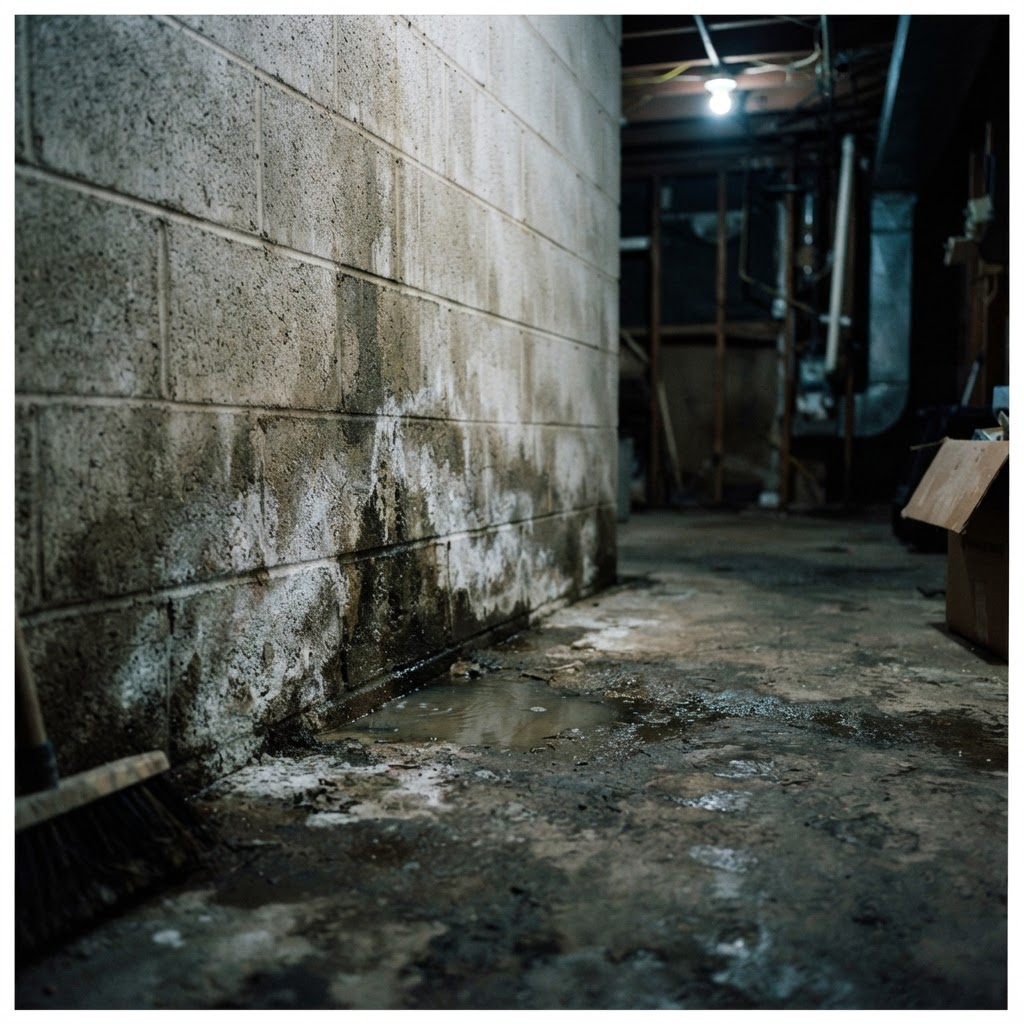 Before
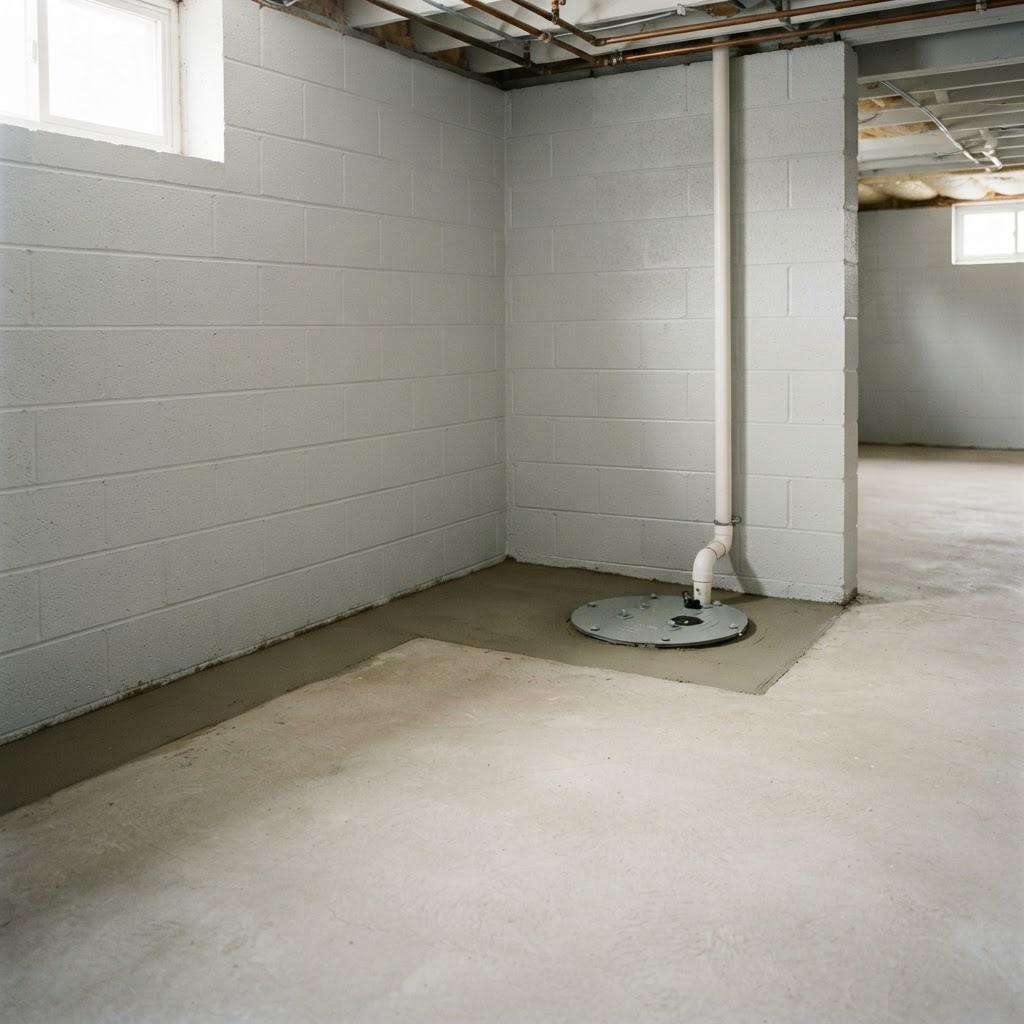 After
A wet basement with water at the floor joint — the original drain tile had collapsed. We replaced the system and it's been dry through every storm since.
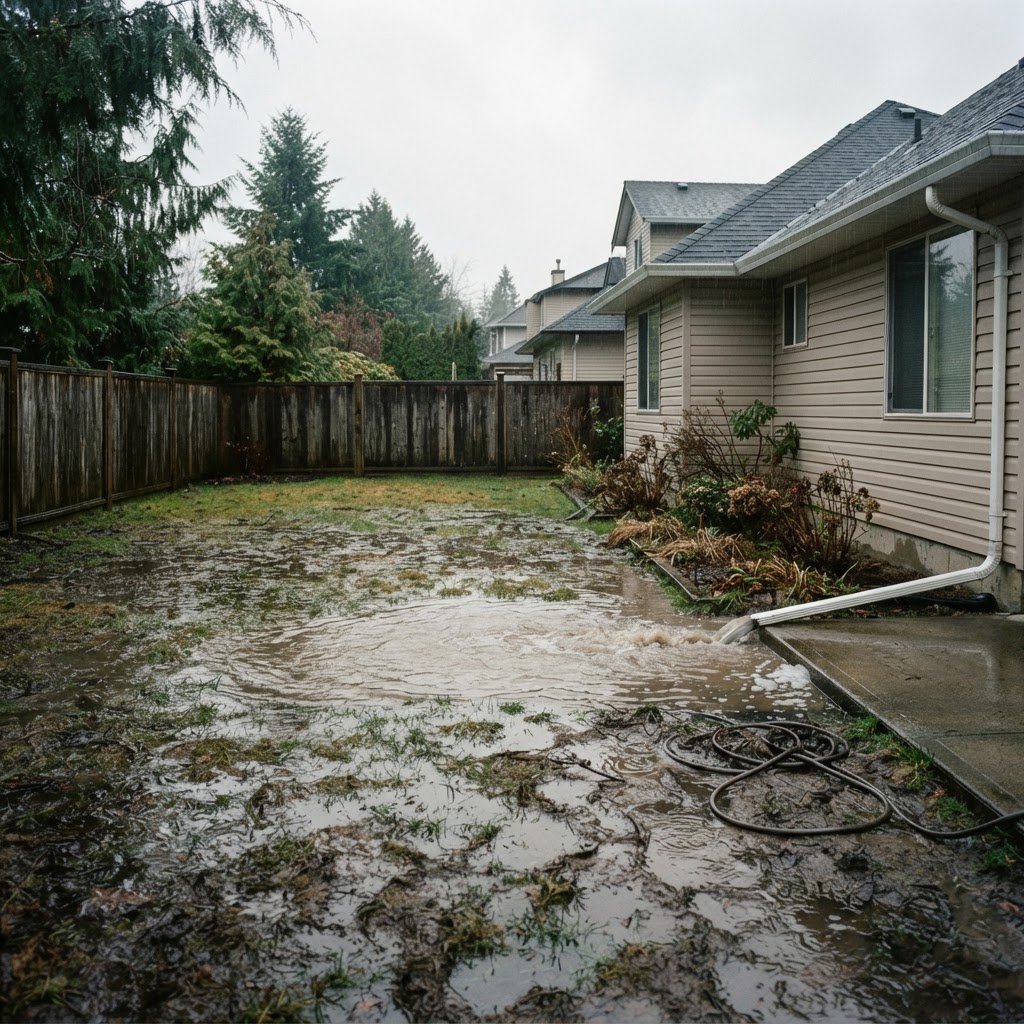 Before
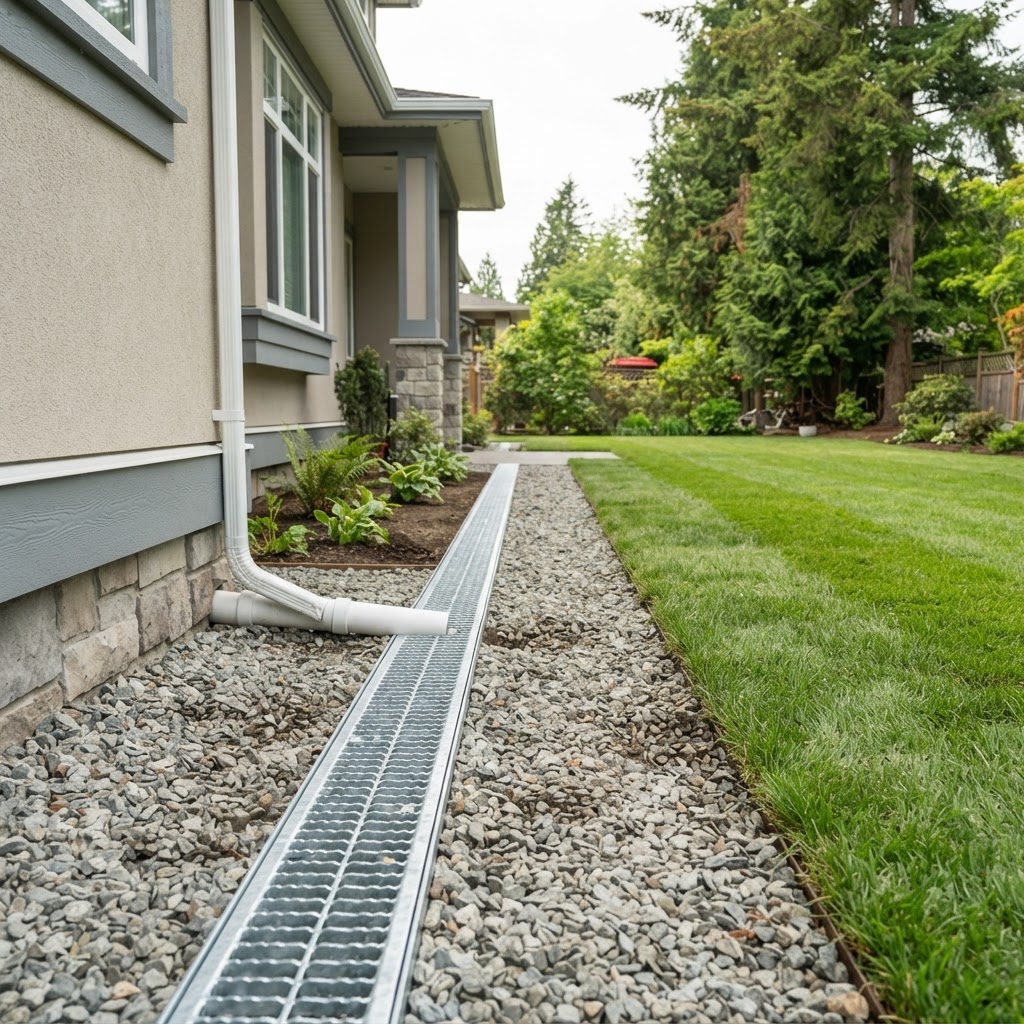 After
A soggy yard where the downspout dumped onto the lawn. We tied the downspout underground, ran a French drain along the foundation, and the yard dried out within a week.
Wet Basement Repair FAQs in White Rock
How do I know if my White Rock wet basement is the drain tile or something else?
Start with where the water appears. At the floor-to-wall joint it usually means the drain tile. Running down the wall or out of a visible crack it usually means the waterproofing. Near the top of the wall or a window it usually means surface water. With sandy bluffs and 1950s-80s homes, the first two are the more likely causes here, and we confirm with a camera before recommending anything.
Can a wet basement be fixed without digging up the foundation?
Sometimes. Grading, downspout discharge and a single wall crack can be handled without excavation. If the drain tile has failed or the waterproofing along a wall has broken down, excavation is the only lasting fix. We start with the least invasive option that will actually solve it.
Will fixing the drain tile dry out my White Rock basement?
If the drain tile is what is letting water in, yes. If water is also coming through wall cracks or a failed membrane, drainage work alone will not stop it, and we tell you that during the inspection rather than after the invoice.
Related drainage services
These are the services most closely related to wet basement repair in White Rock. Each links to a page with more detail on what is involved.
Wet Basement Repairs
Learn moreBasement Waterproofing
Learn morePerimeter Drainage
Learn moreFoundation Drainage
Learn moreOther drainage services in White Rock
Besides wet basement repair, we offer these drainage services in White Rock. Each has its own page with local detail.