

Foundation Waterproofing in Vancouver
Waterproofing is the layer on the wall itself — separate from the drain tile, which stops water building up from below. Character homes from the 1920s to 1940s on clay tile, then a wave of 1960s to 1980s builds on early corrugated pipe. Both materials are past their expected service life now. Glacial till under most of the city, with marine clay through the low ground near False Creek and sandy deposits across Fairview and Kitsilano. Clay holds water and pushes it sideways against a foundation; sand lets it through quickly but carries fines into the pipe with it. We waterproof foundation walls across Vancouver, and we tell you honestly when the wall is not the problem.
Waterproofing vs. damp-proofing
Damp-proofing is a thin, basic coating (usually bituminous) applied to the foundation wall during original construction. It resists moisture vapour but does not bridge cracks or hold back liquid water under pressure. Waterproofing is a membrane system — flexible, bonded to the wall, and designed to stop liquid water from passing through. Most older homes have damp-proofing, not waterproofing, which is why walls leak as the coating ages.
Exterior vs. interior waterproofing
Exterior waterproofing stops water before it enters the wall. Interior waterproofing manages water after it has already come through — typically an interior perimeter channel at the base of the wall that collects water and routes it to a sump pump. Interior systems are less disruptive to install and can be the right choice where exterior access is impossible.
The honest difference: exterior waterproofing is a permanent fix that stops water at the source. Interior waterproofing is water management — it lets water in and pumps it out. For a finished basement, exterior is the better long-term investment.
Cracks, cold joints, and details that matter
Water does not need a large opening to enter a foundation. A hairline crack in a poured concrete wall, a cold joint where two pours meet, or a form-tie hole can all let water through under hydrostatic pressure. For isolated cracks, polyurethane or epoxy injection can seal the crack from inside the wall without excavation. When the waterproofing has failed along a section of wall, a section excavation to re-waterproof that stretch is the lasting fix.
Waterproofing in Vancouver: what the ground does to a wall
Glacial till under most of the city, with marine clay through the low ground near False Creek and sandy deposits across Fairview and Kitsilano. Clay holds water and pushes it sideways against a foundation; sand lets it through quickly but carries fines into the pipe with it. That is what decides how much pressure a wall carries. Heavy, slow-draining ground keeps water against the concrete for days after a storm, and that is the condition a membrane has to survive.
The city takes roughly 1,200 mm of rain a year, most of it between October and March, and the ground stays saturated for weeks at a time rather than days. A thin damp-proofing coating was never designed for that load, which is why wall seepage shows up on the lower courses and along cold joints rather than in one tidy crack.
Parts of the older core still drain to combined sewers that the city is separating block by block, so a heavy storm can back a private line up even when the pipe itself is clear.
Foundation waterproofing across Vancouver
We waterproof walls in Kitsilano, Dunbar, Mount Pleasant and across Vancouver, most often on homes where the original coating has given up and the wall has started to weep.
If one wall is failing, a section excavation to re-waterproof that stretch is usually enough. If the wall is damp along its length, a full perimeter excavation with membrane and drainage board is the fix that lasts. The drain tile gets inspected at the same time, because a membrane behind a failed drain is still under pressure.
How water enters basements in Vancouver
Here is what we typically find when we inspect drainage systems in Vancouver. The chart shows the relative frequency of each issue — and why a camera inspection matters before any repair or replacement.
Relative frequency based on typical inspection findings across Metro Vancouver
How a drainage system protects your Vancouver home
Most people never think about their drainage system until it stops working. Here is what a complete system looks like — and where water goes when everything is doing its job.
Rain on roof
Gutters collect it
Downspout
Carries it down
Membrane
Protects the wall
Drain rock
Filters the water
Perimeter drain
Collects groundwater
To sump/storm
Discharged safely
A working drainage system moves water off the roof, away from the foundation wall, and out to a safe discharge point — before it can build up against your foundation.
Before & after — Vancouver drainage work
The kind of results we get on the jobs we do every week across Vancouver.
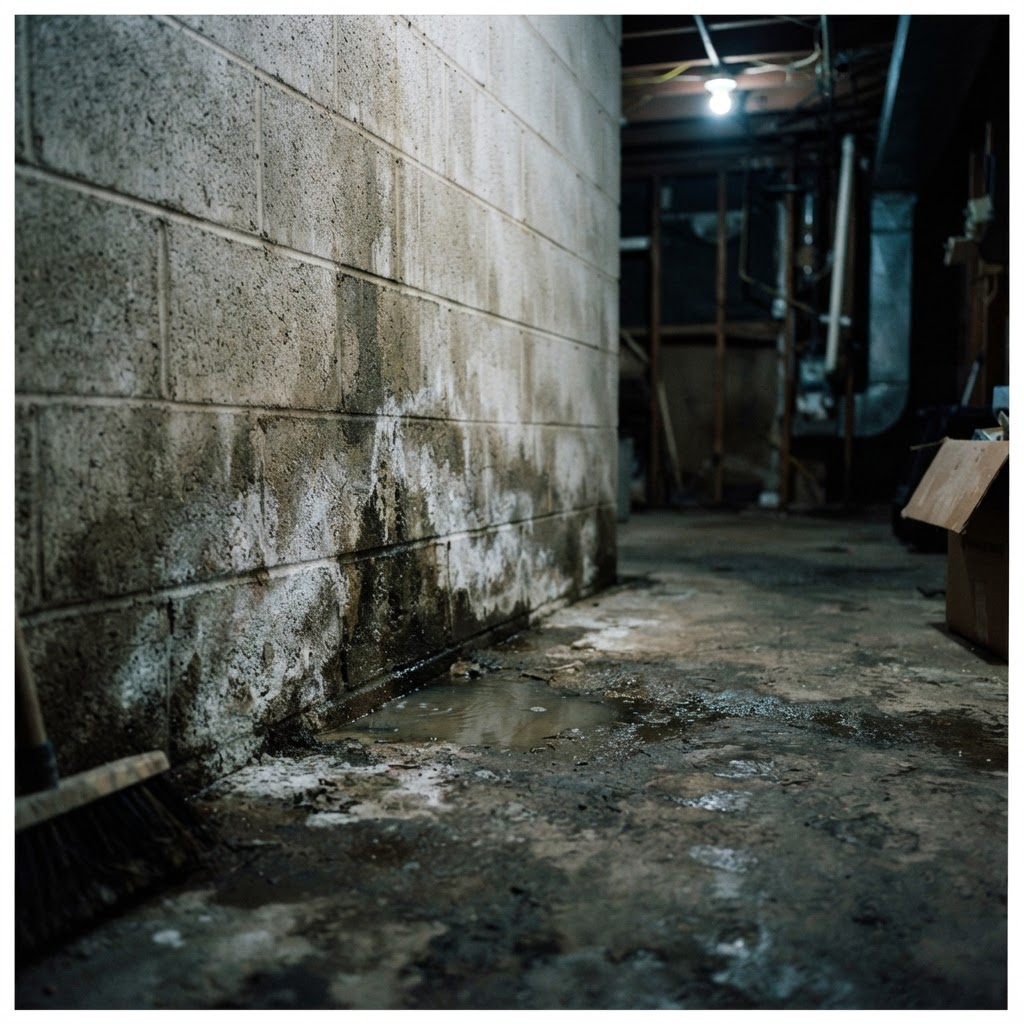 Before
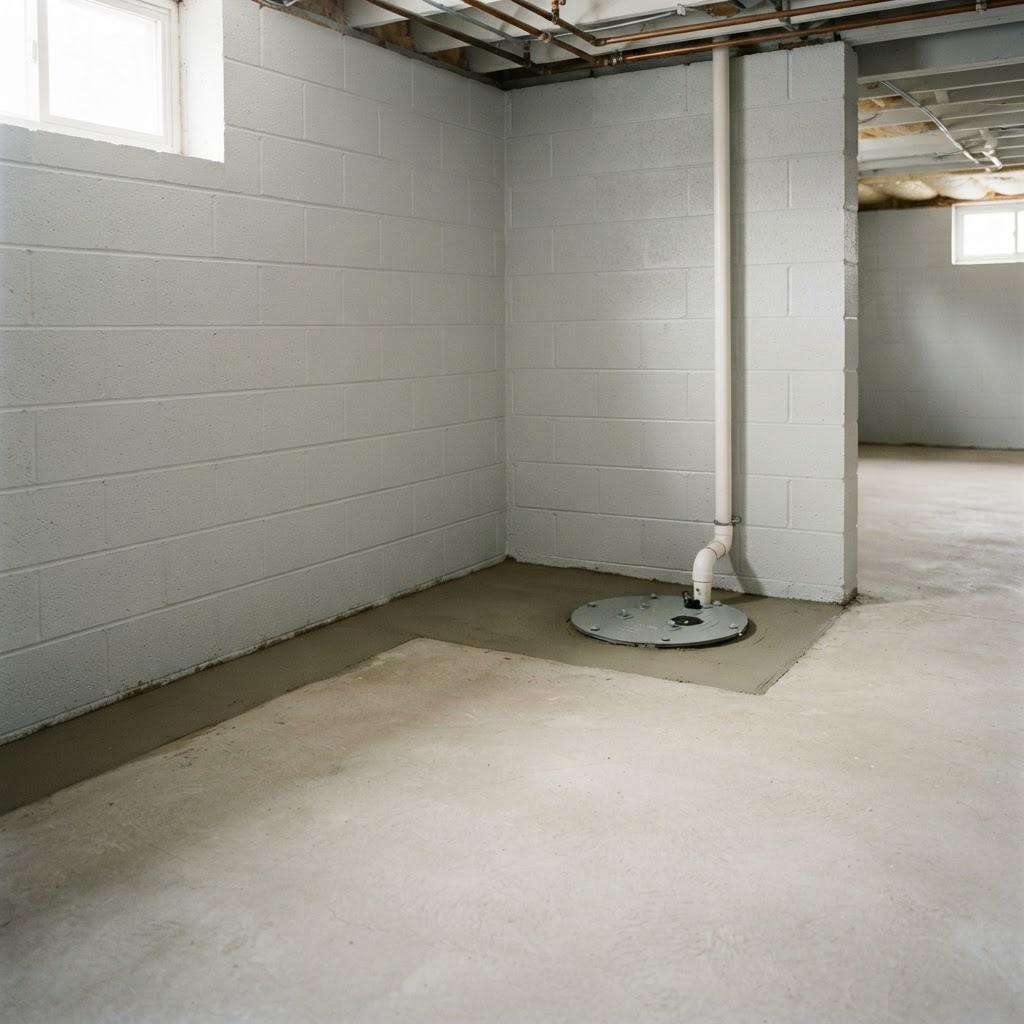 After
A wet basement with water at the floor joint — the original drain tile had collapsed. We replaced the system and it's been dry through every storm since.
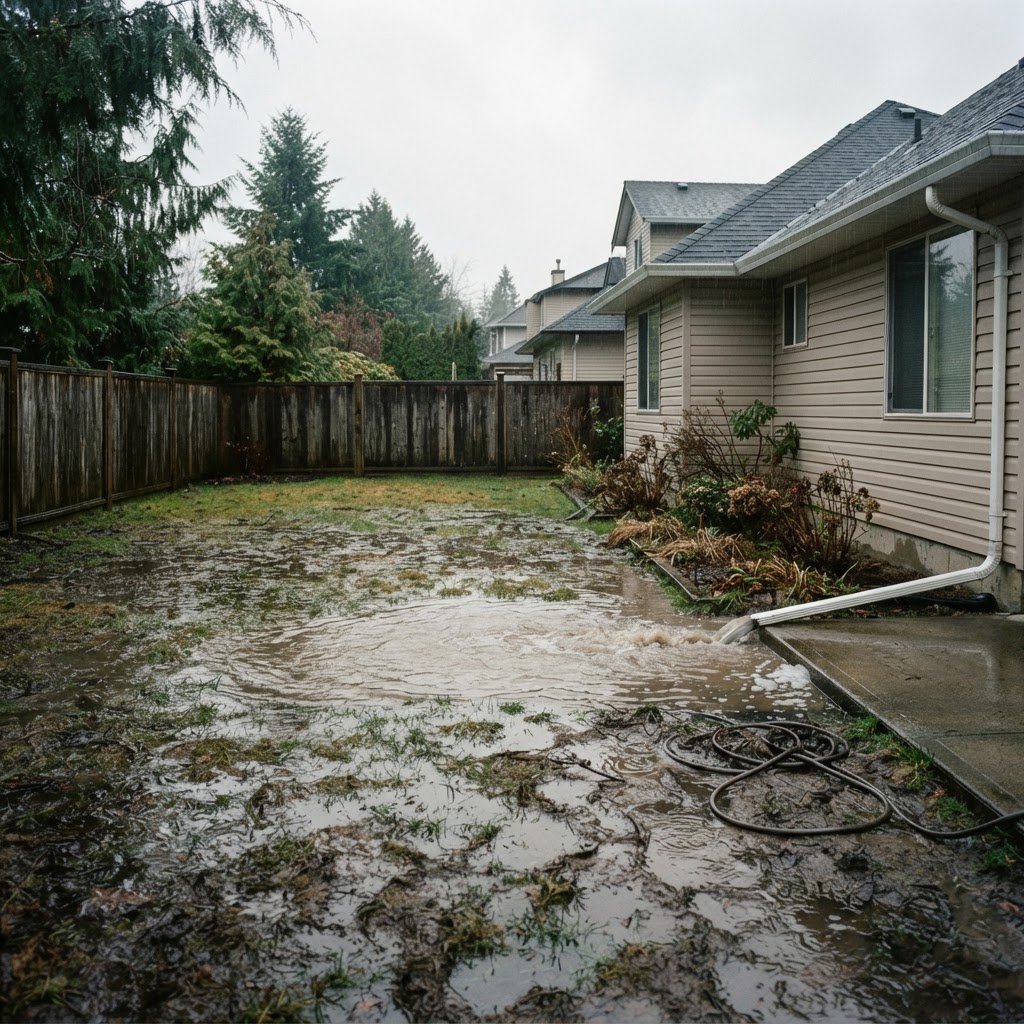 Before
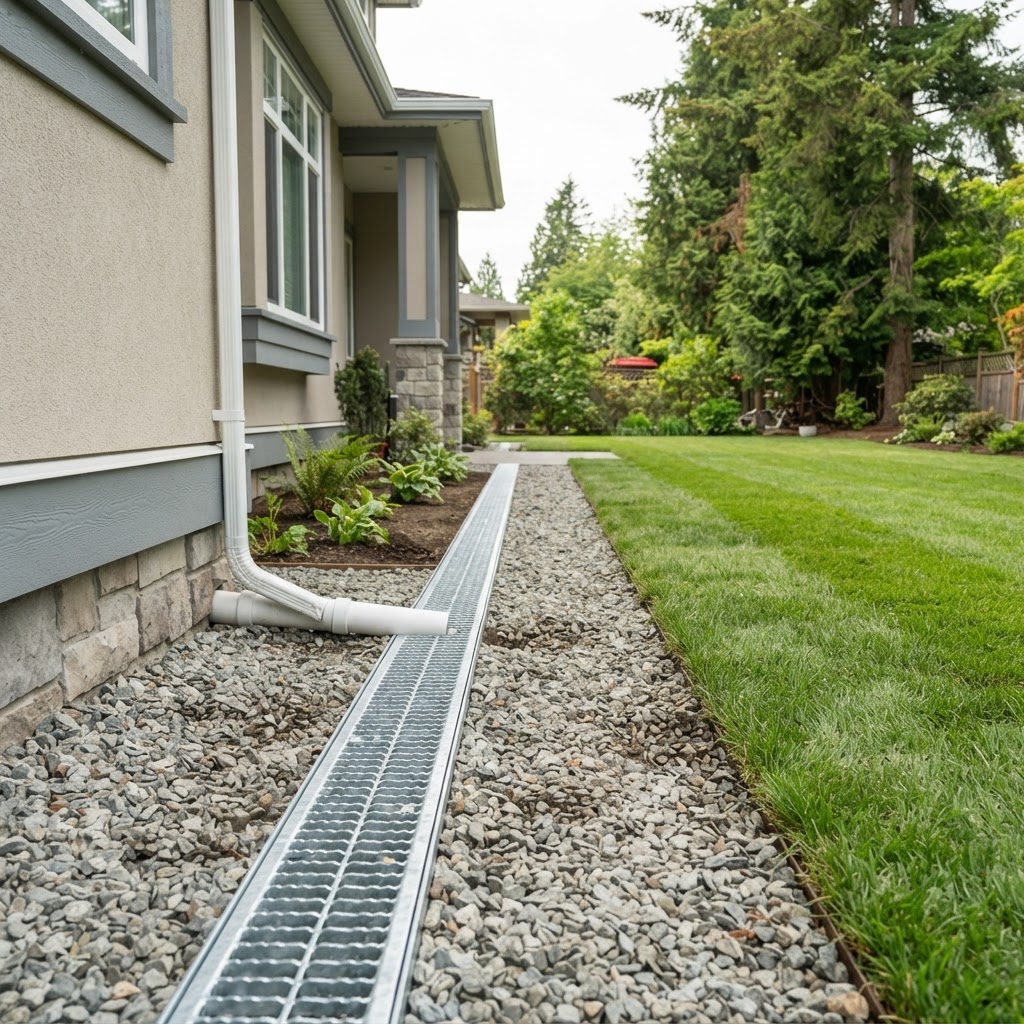 After
A soggy yard where the downspout dumped onto the lawn. We tied the downspout underground, ran a French drain along the foundation, and the yard dried out within a week.
Foundation Waterproofing FAQs in Vancouver
What is the difference between damp-proofing and waterproofing?
Damp-proofing is a thin coating that resists moisture vapour but will not hold back liquid water under pressure. Waterproofing is a membrane bonded to the wall and designed to stop water passing through it. Most pre-1990s homes in Vancouver have damp-proofing, which is why walls leak once the coating ages out.
Do I need to excavate the whole foundation to waterproof it?
Not always. A single failed stretch or an isolated crack can be handled with a section excavation or injection. If the wall is damp along its length, which is common in Vancouver where you have clay tile under 1920s-60s homes, a full perimeter excavation is the honest answer. We assess the wall and tell you which one applies.
How long does exterior waterproofing last in Vancouver?
A modern membrane with a drainage board is built to last the life of the foundation. The original coatings on older homes lasted twenty to thirty years at best, and in ground like Vancouver has, some failed well before that.
Related drainage services
These are the services most closely related to foundation waterproofing in Vancouver. Each links to a page with more detail on what is involved.
Basement Waterproofing
Learn moreWet Basement Repairs
Learn moreFoundation Drainage
Learn morePerimeter Drainage
Learn moreOther drainage services in Vancouver
Besides foundation waterproofing, we offer these drainage services in Vancouver. Each has its own page with local detail.